
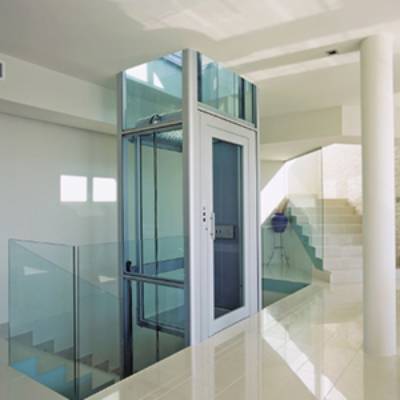
Low-rise homes and apartments need vertical movement without heavy structural changes. A hydraulic lift fits this requirement well. For travel distances, hydraulic technology delivers smooth motion, consistent leveling, and sensible energy use.
How Hydraulic Lifts Work in Compact Buildings
Instead of ropes and counterweights, a hydraulic lift uses a pump, fluid fluid-filled cylinder, and a piston. The pump pushes fluid into the cylinder so the car rises. For downward travel, fluid is released in a controlled way, so the system consumes less power on descent. This operating pattern matches low-rise use, where journeys are short, and passenger comfort is the priority.
Hydraulic lifts are tolerant of shallow pits and limited headroom. That flexibility is valuable when you are adding a lift inside an existing stairwell or narrow light well. Builders can retain more usable space and avoid major beam changes.
Why a Hydraulic Lift for Home is Practical
A hydraulic lift for home is engineered around residential usage. Capacities suit two to four people or a wheelchair with a caregiver. Gentle speeds, accurate stops, and soft starts help children, seniors, and users with reduced mobility feel secure.
Many models work on single-phase domestic supply, avoiding costly electrical upgrades. Because the power unit can be placed beside the shaft, architects gain options in irregular floor plans. This makes a hydraulic lift for home viable for bungalows, duplexes, and low-rise apartments where every square foot matters.
Cost, Maintenance, and Working with an Elevator Company
For low-rise travel, hydraulic systems can be more economical to install than many traction alternatives. Civil work is simpler, and there is no heavy machine at the top of the shaft. Routine service by a qualified elevator company focuses on oil condition, seals, guides, and safety valves.
With regular maintenance and timely component replacement, a quality hydraulic installation offers long service life and predictable performance in everyday residential conditions.
Why Choose ICARE Lifts System for Your Hydraulic Home Lift
ICARE Lifts System is an experienced elevator company focused on customised hydraulic solutions for homes and low-rise buildings across India. The team works closely with homeowners, builders, and architects to match cabin size, load, and shaft constraints with the right model. Site conditions, accessibility needs, and aesthetics are reviewed before finalising specifications.
By choosing ICARE Lifts System, you get a partner that understands retrofits, compact shafts, and Indian residential conditions. If you are planning a new villa, upgrading a family home, or adding accessibility for seniors, a hydraulic lift for home from ICARE offers a practical, carefully engineered way to make every floor comfortably reachable. It works safely, quietly, efficiently, with support.
FAQs
Is a hydraulic lift suitable home?
Yes, it handles short travel efficiently, offering comfortable movement between floors with minimal structural changes.
Is hydraulic home lift actually safe?
It uses certified safety devices, interlocked doors, emergency lowering, and scheduled maintenance to protect riders.
Will hydraulic home lift increase electricity?
No, home lifts run infrequently, so overall energy use stays moderate compared with commercial installations.
Can I add hydraulic lift later?
Yes, shallow pits, compact equipment, and flexible positioning usually allow retrofits with limited civil modifications.
Can a hydraulic home lift be customised to match my interior design?
Yes, cabin finishes, doors, lighting, and controls can be tailored to complement your interior decor.
