
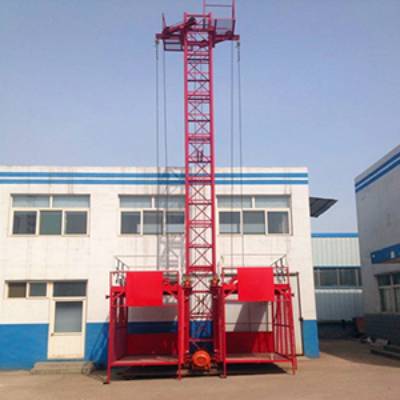
Multi-storey construction in India is speeding up. Taller buildings require faster material movement between floors. A well-chosen construction lift directly affects labour productivity, site safety, and whether a project stays on schedule. Here’s why builders across India are choosing advanced material lifts over traditional methods.
The Problem with Manual Material Handling on Tall Buildings
Manual handling on sites above 8 floors leads to real, measurable losses:
- Workers lose productive hours carrying materials up staircases
- Wet concrete loses workability before it reaches upper floors
- Improvised hoisting creates safety risks and liability exposure
- Supervisors struggle to coordinate teams spread across floors
These issues compound daily. On a 15-floor project, vertical transport inefficiency can consume 20-30% of labour time.
What Advanced Material Lifts Bring to the Site
A material lift for construction designed for contemporary multi-level buildings exceeds the capabilities of a standard hoist. The system provides multiple functions through its variable-speed control, enabling the mast to extend to building height, while its overload sensors, gate interlocks, and wide-deck platforms support both pallet and equipment use.
Old Hoist vs. Advanced Material Lift: What Actually Changes
| Parameter | Traditional Rope Hoist | Advanced Material Lift |
| Load Capacity | 200–500 kg, inconsistent | 1,000–3,000 kg, rated and stable |
| Scalability with Building Height | Fixed, limited | Mast-extendable as floors increase |
| Speed and Control | Manual, jerky operation | Variable speed, smooth and safe |
| Safety Systems | Minimal | Interlocks, overload sensors, gate alarms |
| IS/BIS Compliance | Often non-compliant | Designed to meet Indian standards |
| Best Suited For | Low-rise, short projects | 8+ floor multi-storey projects |
Why Builders Are Switching Now
- Labour costs are rising: Replacing 6-8 labourers doing vertical transport with one efficient lift system pays off within months on a large project.
- RERA and bank deadlines are tighter: A consistent supply of materials on upper floors prevents delays that trigger penalties and payment hold-ups.
- Safety audits are stricter: Builders bidding on government or institutional projects need a certified construction lift on site, not a rope-and-pulley workaround.
Build Smarter. Move Materials Faster. Choose ICARE Lift System.
When builders look for the best elevator company in India for multi-storey construction needs, ICARE Lift Systems delivers on what actually matters on site: load-rated equipment built for Indian conditions, mast systems that scale with the building, on-site installation support, and an AMC programme that keeps the lift running through the full project lifecycle. Our systems are IS/BIS compliant and backed by field experience across residential, commercial, and infrastructure projects.
If vertical transport is slowing your project down or creating safety gaps, ICARE Lift Systems has a solution built for your site. Visit icarelifts.com to explore our range of construction lifts or request a quote today.
Frequently Asked Questions
1. How long does installation take for an advanced material lift?
Most systems are installed and operational on site within 2-4 working days.
2. Can the lift handle both passengers and materials?
Yes, combined-use models exist, but load ratings and safety configurations differ per application.
3. What routine maintenance does a construction lift need?
Monthly inspections of wire ropes, mast joints, electrical panels, and interlocks are a standard requirement.
4. Is an advanced lift cost-effective for a 6–8 floor project?
Yes, once you factor in labour savings and reduced material wastage across the project timeline.
5. Does ICARE offer rental or flexible procurement options?
ICARE offers flexible arrangements; contact their team directly for project-specific pricing and availability.
