
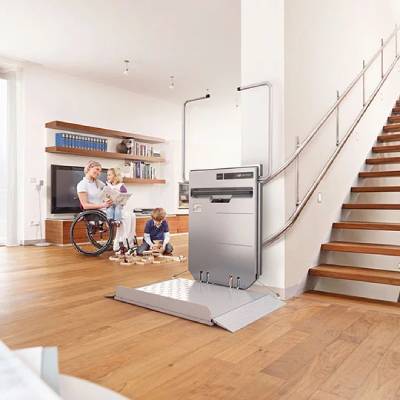
Many homes and apartments across India come with steep stairs or narrow passages. These features create daily hurdles for people who find it hard to move between floors. Stair lifts change such stairs for wheelchair access into a straightforward option. Users sit on a seat and ride up or down without strain.
Understanding Mobility Barriers in Indian Buildings
Buildings in cities and towns often follow older designs. Tight staircases leave little room for changes. Families live in multi-story houses where elderly members or those recovering from injury struggle daily. Narrow lanes outside make it difficult to add ramps. Frequent power cuts raise safety concerns during movement. These issues reduce freedom and force dependence on others for basic tasks.
How Stair Lifts Provide a Practical Solution
Stair lifts use a seat that moves along a rail fixed to the steps. Press a button and the seat glides at a steady pace. Straight rails work for simple flights, while curved rails follow the bends seen in many Indian homes. Setup usually finishes in one or two days. The rail attaches directly to the steps, so major wall work is avoided.
Practical Benefits of Installing Stair Lifts
- Users move freely without constant help from family members
- Fall chances drop on slippery or busy stairs
- Battery backup keeps the system running through power outages
- The rest of the house stays the same for everyone else
- Overall expense stays lower than full structural upgrades
Stair Lifts Compared to Traditional Solutions
Stair lifts suit existing Indian buildings better than many other choices in common situations.
| Feature | Stair Lifts | Home Elevators | Ramps |
| Space needed | Uses current stairs | Requires a separate shaft | Needs a wide open area |
| Installation time | 1 or 2 days | Several weeks | Few days |
| Cost level | Moderate | High | Medium |
| Wheelchair access | Needs short transfer | Allows direct entry | Full access possible |
| Suitability | Narrow or older stairs | New constructions with extra space | Gentle outdoor slopes |
The table highlights why stair lifts often become the faster, less disruptive choice for typical Indian homes.
Finding the Right Support from Top Providers
Select providers familiar with local stair patterns and custom rail work. This approach supports wheel chair users who can shift safely to the seat. Among the best lift companies in India, focus on those that offer reliable after-sales checks and quick response for service needs.
ICARE Lift System provides straightforward guidance on stair lift models suited to Indian conditions. Visit https://icarelifts.com/ to review specific stair requirements and receive a clear installation outline. The team focuses on suitable options that avoid unnecessary alterations. Families gain easier daily movement through this approach.
Frequently Asked Questions
How do stair lifts attach to stairs?
Stair lifts fix the rails directly to the steps with simple brackets and require no extra space.
Who should consider a stair lift in India?
People with weak legs or who have recently had surgery, and those living in homes with stairs, benefit most.
Do stair lifts need electricity all the time?
No, most models include battery backup so they run during common power outages.
Can stair lifts handle curved Indian stairs?
Yes, curved models follow turns and bends found in many traditional Indian houses.
How long does stair lift maintenance take?
Annual checks require a single visit and keep the system running smoothly for years.
