
Renovation and structural repair projects interrupt normal circulation and create access gaps for people who rely on a wheel chair. When lifts are shut down or staircases are altered, movement within occupied buildings becomes difficult to manage. Temporary access solutions allow residents, employees, and visitors to continue using spaces during active construction. These systems must handle uneven surfaces, level variations, and partial structures without manual lifting. Planning temporary access is a functional requirement tied to safety and responsibility. Proper solutions protect independence, reduce site risk, and support renovation timelines without forcing relocation or limiting essential building operations during repair phases.
Assessing Access Conditions During Renovation
Construction phases introduce barriers that change as work progresses. Entry points may shift, corridors narrow, and floor levels vary. For a wheel chair user, even minor elevation changes disrupt movement. Temporary planning starts by identifying circulation paths that remain usable across all stages. These paths must support turning clearance, stable surfaces, and defined load limits. Access systems should remain predictable and avoid frequent repositioning. Integrating access planning into the construction workflow prevents unsafe improvisation and supports coordination between contractors, occupants, and facility managers throughout repairs.
Ramps and Stair-Based Temporary Solutions
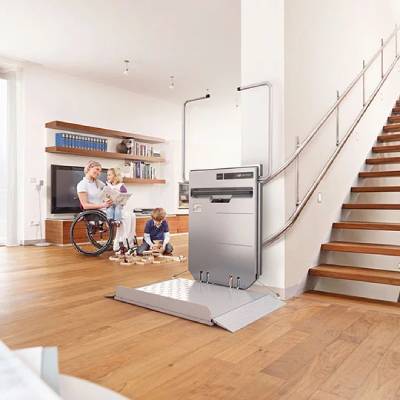
Portable ramps address small height differences but face limits related to slope compliance and available space. Many renovation environments cannot support compliant ramp lengths. In such cases, engineered stairs for wheelchair systems provide a controlled solution. These systems use guided tracks or lift-assisted movement aligned with existing stair structures. Installation does not require permanent structural changes, allowing removal after project completion. Stair-based systems support consistent travel and reduce reliance on attendants, making them suitable for residential buildings, clinics, offices, and public facilities undergoing phased repair work.
Temporary Lifts for Vertical Movement
A construction lift provides vertical access when elevators remain inactive. These systems manage multi-floor movement and support consistent circulation. Temporary lifts integrate with scaffolding or external frames, allowing interior work to continue without blocking access routes. Secure enclosures, controlled entry points, and stable landings are required for safe use. Separating passenger movement from material handling protects users and maintains order on active sites. Proper planning allows lift placement to adjust as construction stages change.
Maintaining Access During Repairs with ICARE Lifts System
Temporary access solutions require engineered planning rather than improvised fixes. ICARE Lifts System delivers temporary and semi-permanent accessibility solutions designed for renovation and structural repair environments. Their range includes stair-based access equipment and temporary lifting platforms aligned with safety requirements. ICARE focuses on installation efficiency, operational stability, and regulatory compliance. These systems allow renovation work to proceed while preserving independent movement for users. By supporting access continuity throughout repair phases, ICARE Lifts System helps buildings remain functional without altering long-term structural design intent.
FAQs
1. Why is temporary accessibility necessary during renovation projects?
It ensures wheelchair users can move safely when permanent access infrastructure is unavailable.
2. Are temporary wheelchair access systems safe for occupied buildings?
Yes, when installed correctly, inspected regularly, and used within defined load limits.
3. Can stair-based access systems replace ramps temporarily?
Yes, they suit environments where ramp slopes or space limitations prevent safe installation.
4. When should a construction lift be used during repairs?
When vertical movement across multiple floors is required, and elevators are inactive.
5. Who is responsible for temporary accessibility safety on site?
Property owners and project managers share responsibility for monitoring compliance and usability.
